
Table of Contents
Introduction
This is the first in an occasional series of articles that we are doing on Tourist Trains in Japan.
Japan has quite a few trains tourist trains that fall into several groups:
- Sight Seeing Trains
- Restaurant / Cafe Trains (these also are usually sight seeing trains)
- Themed Trains
- Others.
In this first of this series we feature JR East’s “Kairi”. Kairi is a sightseeing / Dining train operating along the Japan Sea Coast between Niigata and Sakata.
Kairi – Sea and Countryside
Kairi is one of JR East’s tourist trains, or as sometimes known “Joyful Train”. Kairi started operations in October 2019.
The name “Kairi” is best explained by the kanji “海” – Kai, which means sea and “里” – Sato but can be read as Ri which means village, hamlet or countryside, hence 海里 or Kairi.
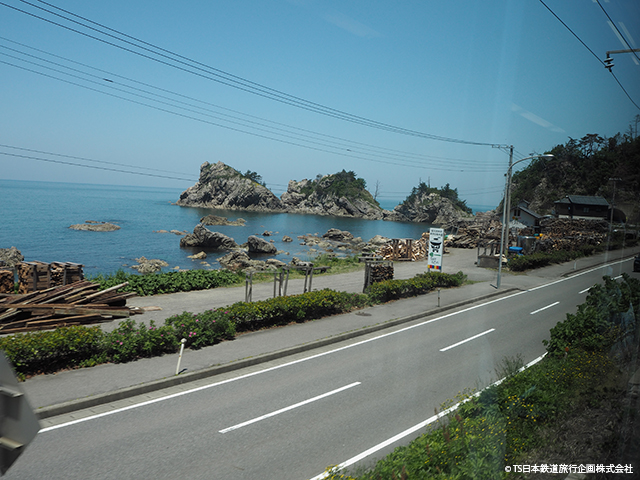
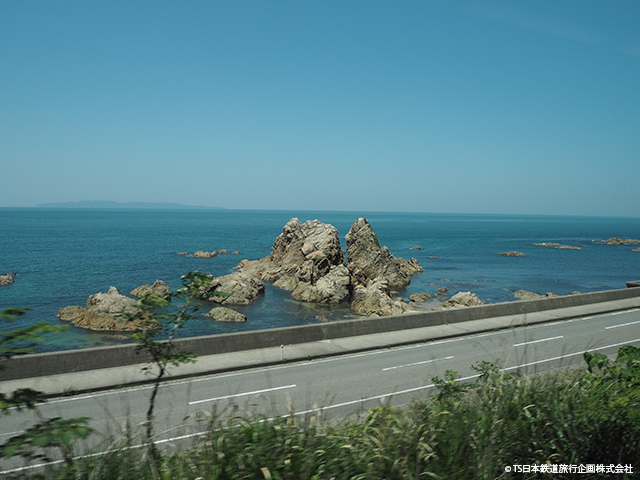
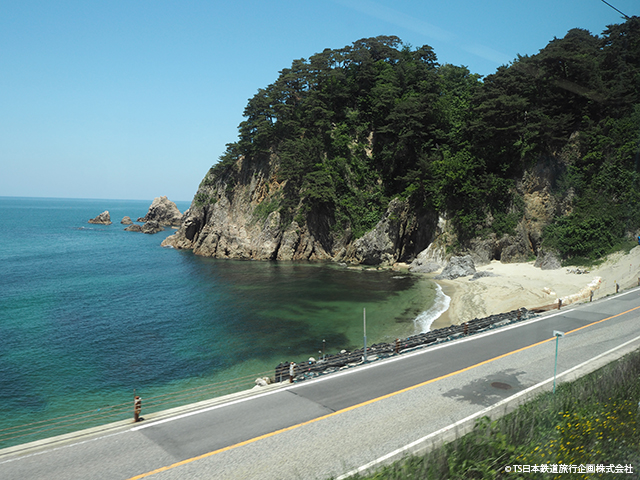
The name symbolises the fact that on one side of the train you have the rugged Japan Sea Coast for most of the journey, and on the other side is rural villages and countryside. In fact when the train is not running close to the Japan Sea coast you have countryside and rural villages on both sides.


Route: Niigata~Sakata
Kairi runs between Niigata (Niigata Pref) and Sakata (Yamagata Pref) along the Hakushin and Uetsu Main Lines.

As you will see from the map for much of the route the train runs along the Japan Sea Coast (click to enlarge map)
It passes through the cities of Murakami (Niigata), and the Yamagata city of Tsuruoka (Atsumi Onesn & Tsuruoka) before arriving at Sakata (Yamagata). The train also makes stops at various stations in Niigata and in particular Kuwagawa, a station which is very close to the sea at the southern end of the rugged Sasagawa Nagare Coastline, as well as in the Shonai region of Yamagata Prefecture..
The Train, operation and booking information
A train designed for sightseeing
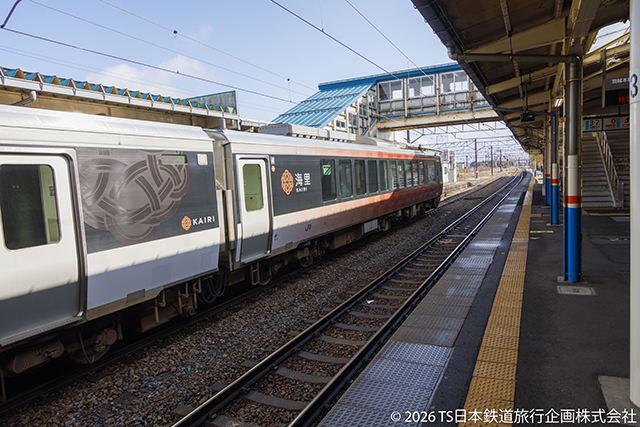
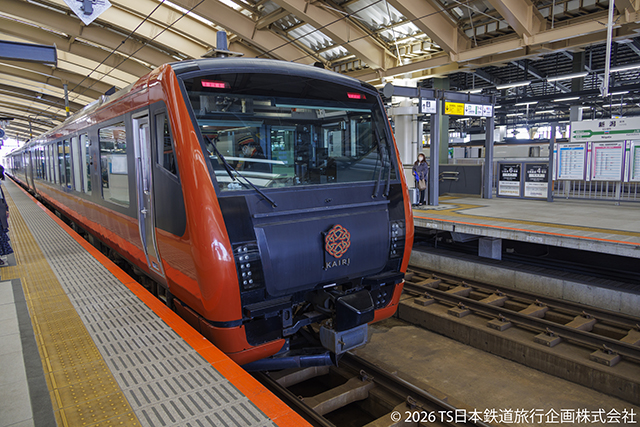
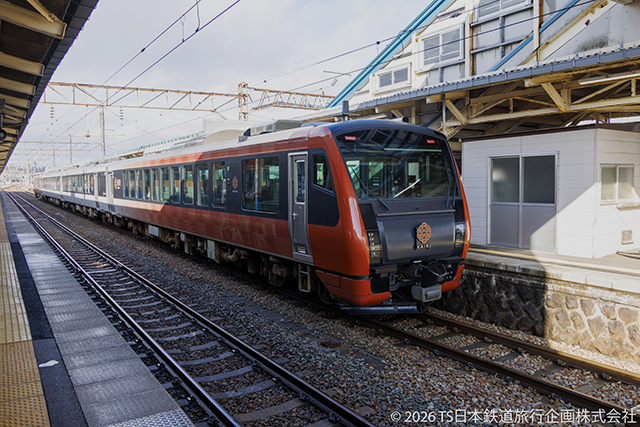
The train is a modern diesel hybrid train and has 4 coaches, including one with a kiosk and event space.
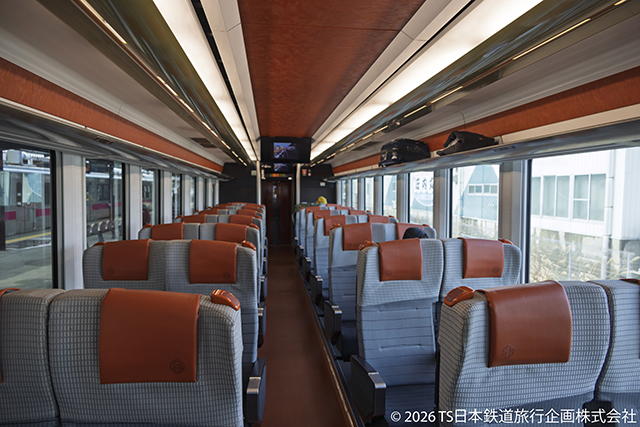
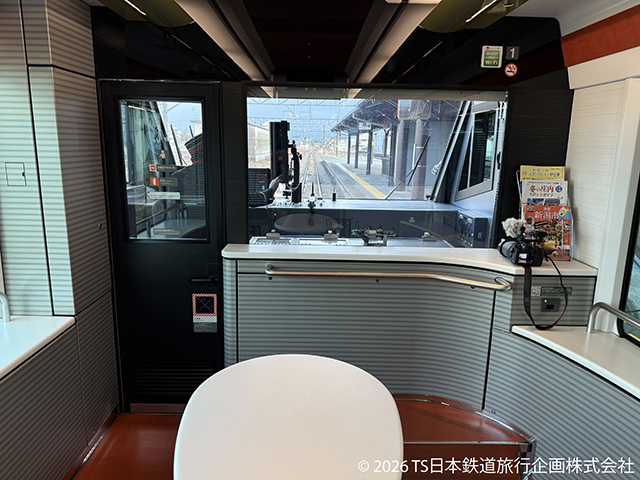
The train is a dedicated sightseeing train. It has large windows and seating is designed to give the best view. The train slows down at certain points to allow passengers to take pictures. Except during the winter it also makes an extended stop at Kuwagawa where the station is very close to the sea, allowing passengers to get off and and feel the sea atmosphere.
The Dining Car is for those who have booked an exclusive “Kairi” obento (boxed meal). The actual meal is seasonal and is prepared by chefs using Niigata or Yamagata ingredients. You have to order these obento’s in advance on a special website (https://maas-portal.com/uketrip/tickets/3763 Japanese only) that also must be used to book seats in this section of the train. The Obento will be delivered on the train (they are not prepared on the train)
Riders can order special obento’s (boxed meals) made from local ingredients by local chefs in advance (information below)
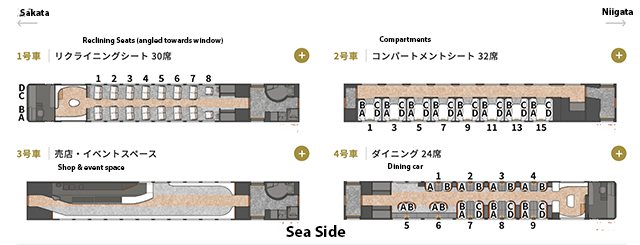
- Car 1 – reclining seats (angled towards windows) sightseeing lounge at driver / conductor end)
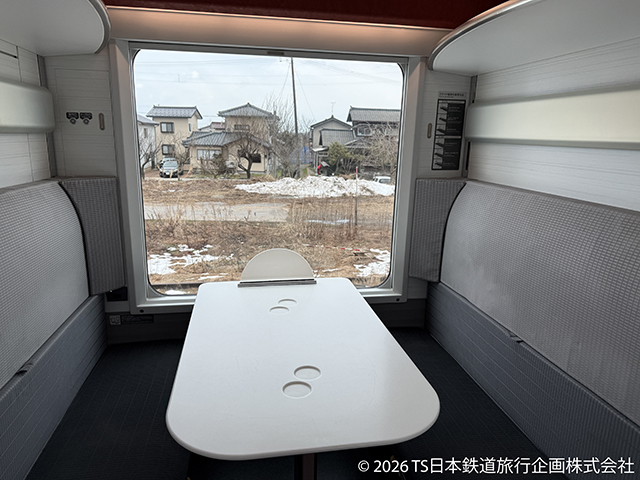
- Car 2 – Compartments (all on sea side)
- Car 3 – Kiosk and event space (drinks, snacks and small mementos)
- Car 4 – Dining car (see below).
The two end cars have small lounges at the driver / conductor ends.
Days of Operation
The train operates most weekends and holidays. Except during the winter it also operates on Fridays. On days of operation it does 1 round trip. The return trip from Sakata various seasonally so that passengers can see the sunset over the Japan Sea.
Tickets
The standard basic fare is payable plus seat reservation fare. All seats are reserved, but as it is classified as a Rapid / 快速 train the seat reservation fare is very cheap at ¥840 for Niigata~Sakata for single seat occupancy (as at January 2026).
JR Rail Passes and JR East regional passes (for inbound visitors) covering the Tohoku region are valid for travel on Kairi, but seat reservations need to be made on JR East’s booking site.
For those ordering the exclusive obento the seat reservation is included in the meal cost and has to be ordered on the special website (see below). This service is not covered by JR Rail Pass or JR East regional passes.
JR East Kairi Information https://www.jreast.co.jp/en/multi/joyful/kairi.html
Booking and more information
All seats (including compartments) can be booked on JR East’s booking site
https://www.eki-net.com/en/jreast-train-reservation/Top/Index (English).
As the train is classified as a “Rapid / 快速” service the seat reservation fare is less than the Limited Express Inaho seat reservation.
For reservations in car 4 (Dining Car) which must be reserved in conjunction with ordering a meal, please use the link in the box above.
For Rail Fans
The train is a four car HB-E300 diesel Hybrid . The HB-E300 train is a JR East designed train for tourist trains used by JR East for their tourist trains. As well as Kairi, the HB-E300 model is used for a number of other tourist trains operated by JR East.
The dedicated “Kairi” unit for which there is only 1 is based at JR East’s Niigata rolling stock depot.
[numbers are HB-E301-6+HB-E300-106+HB-E300-6+HB-E302-6]
This unit was manufactured by Niigata Transys
The train was introduced in 2019, replacing the Kirakira Uetsu tourist train (modified 485 series).
The Kairi Train is also used occasionally to operate other “tourist special trains” in the JR East Niigata Branch area, in particular on the Tadami Line.
“Kairi” Places of Interest
Murakami – an old Edo period city famous for Salmon and Hina Dolls
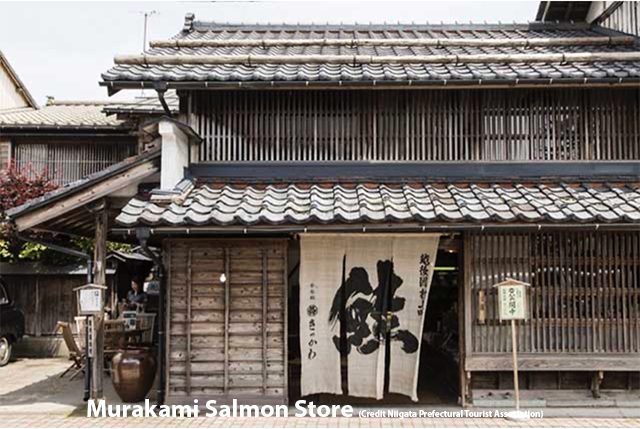
Murakami is the Northern most city of Niigata Prefecture, sitting on the Japan Sea Coast. It is famous for salmon, Murakami Beef , its Taisai Festival and the Murakami Machiya Hina Doll Festival. It is also famous for green tea and sake.
Much of the central part of Murakami has many preserved Edo period buildings.
Kuwagawa – A station by the sea
Except during the cold winter months, the Kairi makes an extended stop at Kuwagawa allowing passengers to get off briefly and see the sea (and buy snacks at the station).
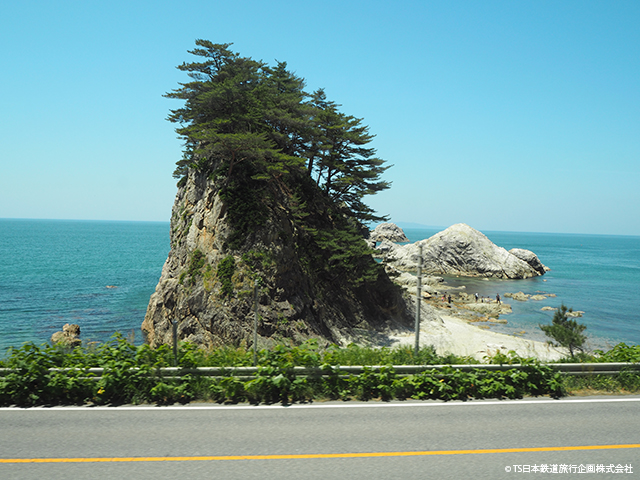
From Kuwaga until just beyond Atsumi Onsen passengers get scenic views of the Sasagawa Nagare Coastline, the the rock outcrops and small fishing villages. On a clear day you can see the Island of Sado on the horizon.
Atsumi Onsen – A historical onsen town
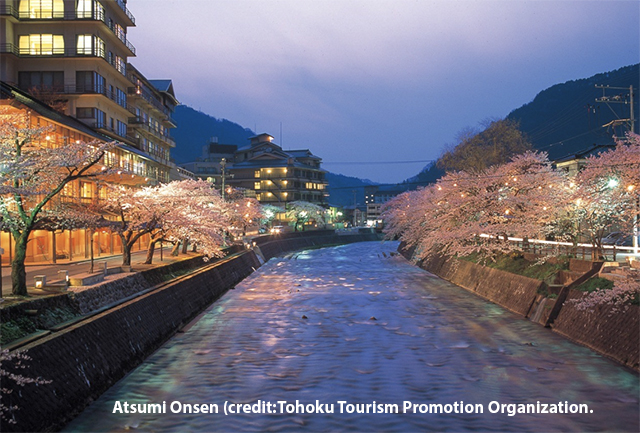
The train also makes a stop at Atsumi Onsen Station. Atsumi Onsen town [onsen=hot spring], part of Tsuruoka City is an historical (1,300 years of history) onsen famous for its alkaline onsen water, which is meant to be good for the skin. Close to the Japan sea coast, the onsen town sits on the Atsumi River which offers seasonal views. The town also has free foot baths that can be enjoyed by visitors. The sakura and rose gardens are particularly popular when in season. The town also has a morning market.
Tourist Information: https://www.tohokukanko.jp/en/attractions/detail_1008.html
Tsuruoka – Japans first UNESCO Creative City of Gastronomy
Shortly after Atsumi Onsen the train heads a little landward to Tsuruoka, which although also on the coast, the station is a little away from the coast. We mention that because the scenery you will see changes between here and Sakata.
Tsuruoka is famous for its food culture amongst other things. Shonai is famous for its rice, edamame, bamboo shoots, wild mushrooms and vegetable production. Over 60 traditional crops and growing methods are registered with the government from the Shonai area. Of course, being on the coast the area is also famous for its premium sea food such as sawara mackerel, and sweet shrimp.
Tsuruoka cuisine is particularly famous for its vegetable dishes and mountain vegetables heavily influenced by the spiritual practices of the Dewa Sanzan buddhists and the Yamabushi.
Dewa Sanzan
Dewa Sanzan refers to the three sacred mountains, Mt. Haguro (414m), Mt. Gassan (1,984m), and Mt. Yudono (1,504m) in this area of Yamagata. Tsuruoka is considered the gateway to the Dewa Sanzan and in particular to Mt Haguro which is a bus ride from Tsuruoka.
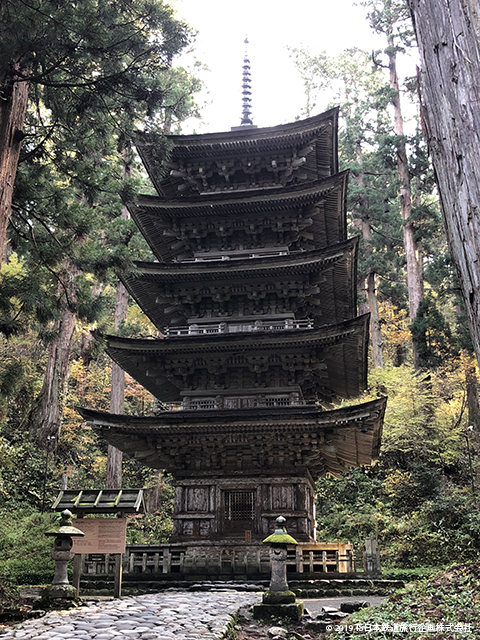
Mt Haguro is a bus or taxi ride from Tsuruoka Station. From the lower part of the forested mountain you get the feel that this is a very spiritual place. In particular there is the 5 storey “Haguro-san Gojunoto (羽黒山五重塔)”, a waterfall and shrines.
[Haguro-san Gojunoto (羽黒山五重塔)is 29m tall and dates back to the 931-938, although was rebuilt in 1372). It is unique in that no nails were used in its construction and is completely unpainted]
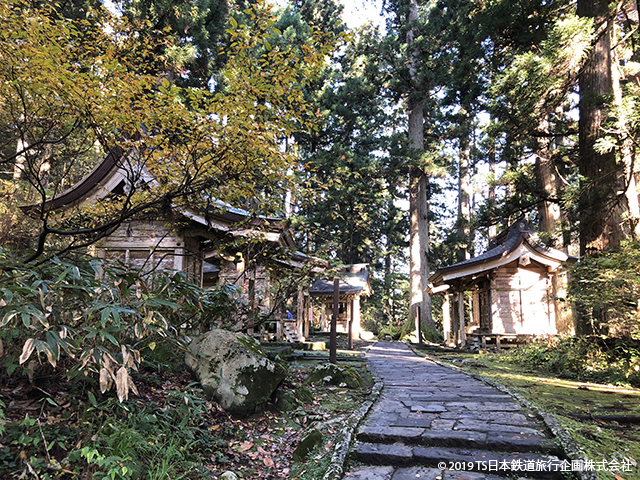
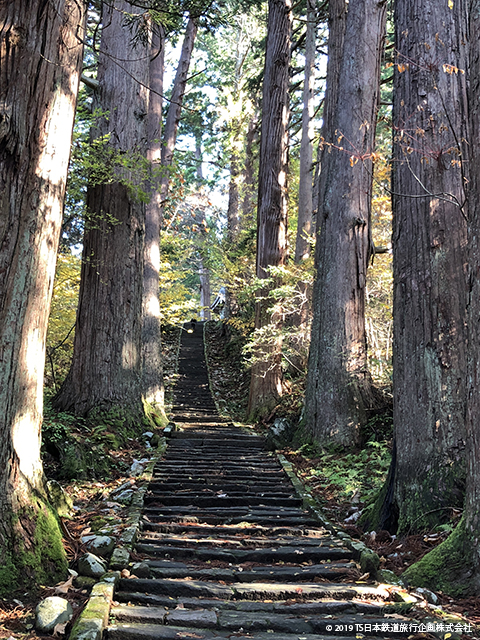
The other famous aspect is that the way that the monks and Yamabushi get to the top of the mountain is via 2,446 stone steps.
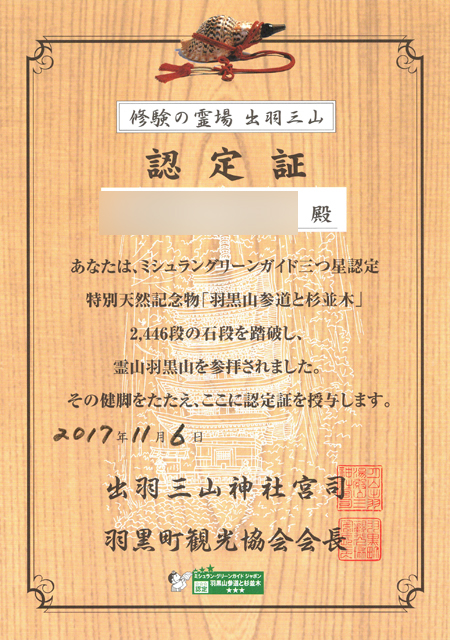
For those who complete the 2,446 you can get a certificate.
Don’t worry though, if the 2,446 steps are may be too much for you, you can get to the top by bus or taxi.
Tsuruoka Tourist Information: https://www.tsuruokacity.com
Sakata – port city and once home to Japan’s wealthiest family…
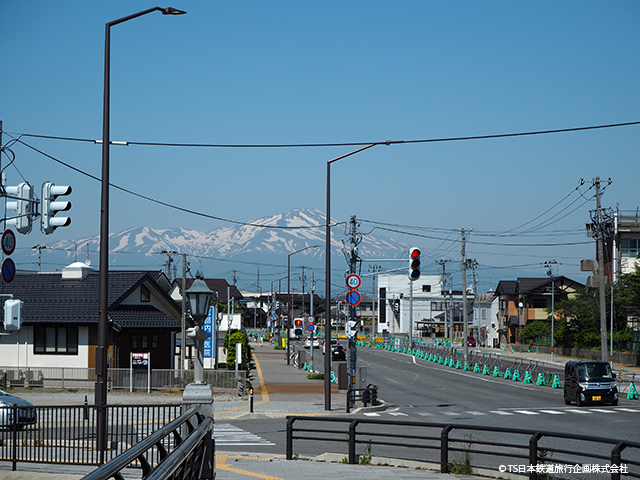
Sakata is a port city at the mouth of the Mogami River, one of Japan’s great rivers and the life line for Yamagata.
The river and the port were very important for getting rice grown in the rich rice paddies of the Shonai district and other parts of Yamagata to all around Japan.
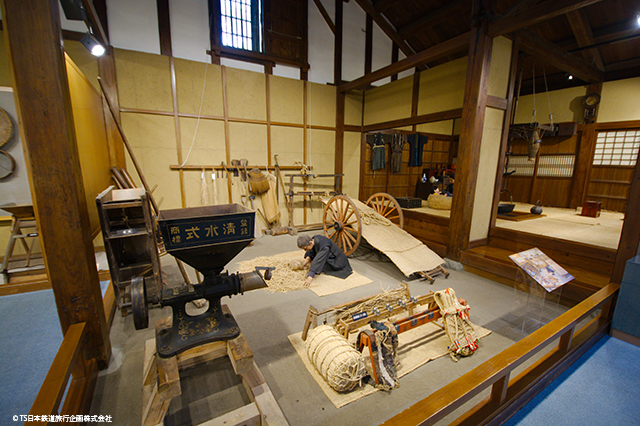
Its importance is signified by the fact that Japan’s wealthiest family during the Mid 18th to Mid 19th centuries, the Honma clan, were from Sakata.
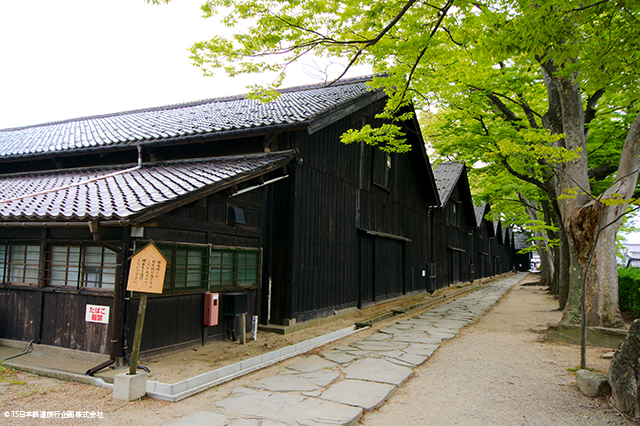
The former Homma Residence is preserved and open to the public. Although the Homma’s were a very rich family during their time, the residence looks quite modest compared to the mansions of today’s rich.
Sakata is also a geisha city, with the Somaro Geisha House.
Sakata Tourist Information https://sakatacity.com
Whether you want to See Japan by Rail or Explore Japan’s Railways, TS Japan Rail can help you plan your trip with ideas, designing travel itineraries, assisting with bookings and more.
We take the stress out of planning your trip and help ensure it is successful!
For more information on our services
see our homepage!


コメント