
Table of Contents
An easy way to see more of Tokyo – Take the Yamanote Line…and get off at those stations you do not hear too much about…
We have often said to people who want to get off the (foreign ) “tourist beaten path in Tokyo”, that there is no better way than catching a Yamanote Line Train and getting off at a few stations never or hardly mentioned in English Social Media posts or printed tour guides!
The sad fact is that most inbound tourists only go to a small number of places in Tokyo and are unaware of the numerous other interesting places.
We also believe that to really get to know, and importantly understand, a place you need to go beyond the popular tourists spots.
This article is not meant to be a guide, but a pointer to some interesting places to visit. We have provided links to further information. Of course there are many more places, particularly if you go beyond the Yamanote Line (at one time expats living in Tokyo who wandered any distance outside the Yamanote Line were regarded as being very adventurous!)
Tokyo, a City of Villages…
Tokyo is known as a “City of villages” due to its diverse neighborhoods, each with its own unique character and charm. These neighborhoods offer a variety of experiences, from bustling city life to serene traditional settings. This diversity contributes to Tokyo’s vibrant and multifaceted culture, making it a fascinating and dynamic city to explore.
In fact modern Tokyo is not a city but a prefecture made up of 23 special wards (basically cities) – and what most people regard as “Tokyo City”, then there is 26 “ordinary cities”, 5 towns and 8 villages (most of which are in the western part of prefecture. This goes some way to explain why Tokyo has so much variety, even in the central part encircled by the Yamanote Line.
Population numbers you often see are also often not explained correctly. The 23 wards 23区内(i.e. central Tokyo) have a population of around 10 million; Tokyo-to 東京都 (the prefecture) 14 million and the big number you usually see, 37 million is the population of Tokyo and surrounding prefectures of Saitama, Chiba and Kanagawa, and usually referred to Greater Tokyo or 首都圏 “shutoken”. (all numbers from the 2025 census). The estimated population (residents) in the area within the Yamanote Line is 4.3 million, although during the day time, particularly on weekdays the population is estimated to be several million more, may be even double.
Yes, there is a lot more outside of the Yamanote Line circle, but in this article we will cover sjust ome of those areas that are easily reached from stations on the Yamanote Line
The Yamanote Line
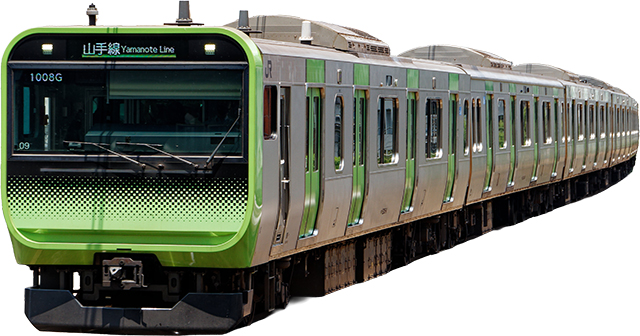
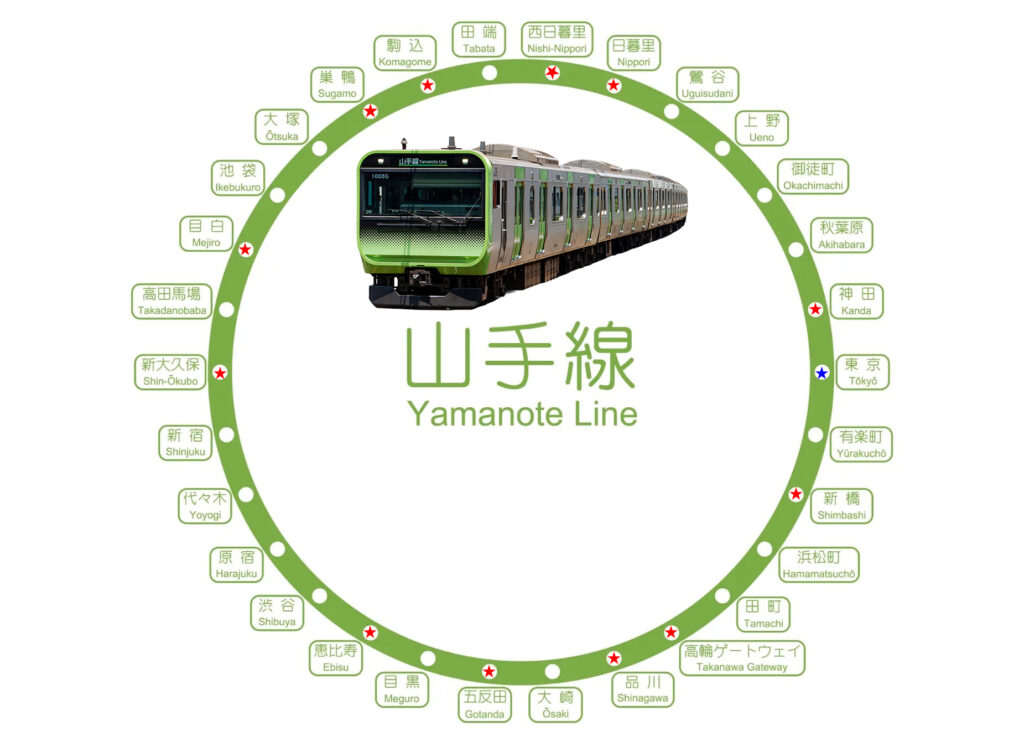
The Yamanote Line is a 34.5km loop line that encircles the central part of Tokyo with 30 stations. The wards (special cities) it runs through are: Chiyoda, Chuo, Minato, Shinjuku, Shibuya, Toshima, Bunkyo, Taito, Arakawa, Kita and Shinagawa. It takes about 1 hour to travel all the way round. It is one of the busiest rail lines in Japan and in fact the world carrying an estimated 4.5mln passengers (*)
During the peak trains run every 2~5 minutes. Apart from linking the various areas in central Tokyo, it also provides connections to many JR and non JR lines providing services in all directions. (*includes passengers who may travel on lines running parallel to the Yamanote Line such as the Keihin Tohoku Line & Saikyo Line)
For rail enthusiasts we have an article on the Yamanote Line on our rail enthusiast site
It cannot be underestimated the role that the Yamanote Line plays in keeping Tokyo working. This has been fully seen when the Yamanote Line has suffered severe disruption (yes trains in Japan do have occasional problems!) and everything, including other lines, buses etc also become disrupted as literally millions of people try and find alternatives.
The “other” interesting places to visit…TS Japan Rail’s selection
IMPORTANT: in this article we have deliberately left out the popular places that inbound visitors go to whilst in Tokyo (Shinjuku, Akihabara, Shibuya, Akihabara, Ueno, Ikebukuro). We are by no means saying you should not visit these places, but there is a lot more to see!
Numbers (e.g. JY11 refer to the line (JY=Yamanote Line) and station number which are shown on many English signs and maps.
Sugamo 巣鴨 (JY11)
[Best Time to Visit: Day time]
At the northern end of the circle, Sugamo is home to the famous Jizodori Shopping Street, also known as Grandma’s Harajuku. The famous product of Sagamo is bright red underwear, which are said to bring the wearer good luck and life longevity. It is also a good place to soak in the more traditional aspects of life in Japan and Tokyo in particular. As well as its famous red underwear, Sugamo is also a place to go for traditional crafts and traditional snacks (sweets).
At the far end of Jizodori (away from the JR station) is the Toden Arakawa Line tram adding to the old time feeling of the area.
The local buddhist temple Togenuki Jizoson Koganji is where many locals go to pray for long life, and is also where the famous “Togenuki Jizo” statue. The story is that the wife of a local samurai was cured of illness and today locals come and wash the statue hoping for a cure for their own ailments.
Tourist Information: https://www.gotokyo.org/en/destinations/northern-tokyo/sugamo/index.html & https://www.japan-guide.com/e/e3066.html
Other Lines: TOEI Mita Line (I15)


Komagome 駒込 (JY10)
[Best Time to Visit: Day time]
Komagome is home to a not so well known but still beautiful park, the Rikugien (Park). Komagome is also the location of the only level crossing on the Yamanote Line (although there are plans to close this in the next decade).


Rikugien information: https://www.gotokyo.org/en/spot/22/index.html & https://www.tokyo-park.or.jp/teien/en/rikugien/
Other Lines: Tokyo Metro Namboku Line (N14)
Nishi-Nippori 西日暮里 (JY08) & Nippori 日暮里 (JY07)
[Best Time to Visit: Day time]
There are two specific things that attract tourists and locals to the Nippori area. The first is “Fabric Town” 「布の街」.
Nippori is famous for its Fabric Street, a 1km street with about 90 establishments selling fabric, sewing accessories and sewing machines and tools. It is the go to place for anyone interested in fabric and sewing. The Fabric Town itself dates back to the Taisho era (1912~1926)


This area is close to Nippori Station.
The second area is Yanaka Ginza which is a pedestrian only traditional shopping street or “Shoutengai” which were and still are in many places, including Tokyo, the centre of local towns and communities. After the big shopping areas of Ginza, Shinjuku, Shibuya and other tourist places, the traditional shoutengai offers a big contrast. Yanaka Ginza is also famous for its obsession with Cats.
What makes Yanaka Ginza stand out from other shoutengai is the dedication that local businesses have to keep the shoutengai running and attracting shoppers.

It can be reached from either Nippori station (0.5km) or Nishi Nippori Station (0.8km).
More information: https://www.gotokyo.org/en/spot/170/index.html https://www.japan-guide.com/e/e3068.html and https://www.yanakaginza.com (Japanese)
Other lines: Nishi Nippori – Tokyo Metro Chiyoda Line; Nippori (C16)- JR Tohoku Main Line; JR Keihin Tohoku Line (JK32); JR Joban Line (JJ02); Keisei Main line (KS02) Nippori Toneri Liner (NT01)
Kanda 神田 JY02
[Best Time to Visit: Day Time & evening]
Kanda is often overlooked being close to the Otemachi, Marunouchi and Nihonbashi business areas.
If you are into traditional coffee shops (Kissaten) Japanese pubs (izakaya), Cafes (curry or noodle) old books and a general local vibe popular with salarymen and students from nearby universities, Kanda is one of those places for you, where you can enjoy a traditional Japanese setting.
Kanda is also home to a famous shrine – Kanda Myojin Shrine 神田明神. This shrine dates back to 730 AD and its deities are purported to prosperity, good luck and marriage. Being close to Akihabara its is often visited by those in electronics. It is also famous with business people from the Nihonbashi, Otemachi and Marunouchi areas praying for prosperity.
Information: https://www.gotokyo.org/en/spot/17/index.html


Another popular place is the old Manseibashi railway station, which when it closed became the railway museum, and when that moved to Omiya, the site was developed as a commercial facility with cafes and craft shops. Chuo Line trains still pass the old station and a feature of the mAAch ecute Kanda Manseibashi facility is a cafe that gives a unique view of the trains passing as it situated within the platform.
Not far from Kanda is the Jimbocho area. If you are into books, and particularly old / second hand books in any subject, this is the place to go to! End October / early November is the time of the Kanda Used Book Festival, which is the largest used book sale in Japan.
Information: https://www.gotokyo.org/en/destinations/central-tokyo/kanda-and-jimbocho/index.html & https://www.japan-guide.com/e/e3074.html
Other Lines: JR Keihin Tohoku Line (JK27); JR Chuo Main Line (Rapid service) (JC02); Tokyo Metro Ginza Line (G13) Jimbocho Station : Tokyo Metro Hanzomon Line (Z07) TOEI Shinjuku Line S06 TOEI Mita Line I10
Although it does not qualify as an “off the beaten path Yamanote Line Station” but as most visitors just pass through the station few realise that it is actually has a very large number of restaurants and shops and is a great place to stop and eat….although busy you will see few inbound tourists.
On the Marunouchi side of the station is the famous Tokyo Station Marunouchi building. Modelled on Amsterdam station, it has an interesting history. Originally built as a three storey (3 levels) building, after the 2nd World Warit was renovated with only two floors. In 2007~2012 the building was renovated again and as well as adding strengthening to protect from seismic activity (earthquakes), the third floor was added back and the two copper domes were also fully restored.

Shimbashi 新橋 JY29
[Best Time to Visit: Day time & evening]
Shimbashi, like Kanda, although there is a different feel is another place popular with salarymen and local workers. Like Kanda it has many izakaya and places to eat at a reasonable price, and gets quite lively in the evenings. Under the railway (Shimbashi~Yurakucho) in particular there are very many places to eat (at reasonable prices). There are also many so called satelite shops in the area – these are shops set up by tourist association from different areas of Japan. Shidome a more modern development between Shimbashi & Hamamatsucho also has places to eat.
From a tourist perspective there are several things near the station:
- The famous SL Square – Shimbashi plays an important role in the history of Japan’s railways, as the Tokyo terminus of the first passenger railway was in Shimbashi.
- Rebuild of the first Shimbashi / Tokyo station. This is a rebuild of the former Shimbashi station which was the the Tokyo terminus of the first passenger rail line in Japan. [the area later became the Shidome Freight Terminal and when that was closed and the area redeveloped the retro station was built as a museum.
- Not far from the old Shimbashi Station is the Hamarikyu Gardens. This is a large park on the coast of Tokyo Bay. It dates back to the 1600s and was owned by various shogun until the Meiji era when the imperial family took ownership. It was heavely damaged during the 2nd World War and after the war the imperial family donated it to the then City of Tokyo and it became a public space. It is an island of tranquility in a fairly nosy area of Tokyo. For flower lovers it has many different varieties of plants https://www.tokyo-park.or.jp/teien/en/hama-rikyu/index.html
Shimbashi Tourist Information https://www.gotokyo.org/en/destinations/central-tokyo/shiodome-and-shimbashi/index.html

Other lines: JR Keihin Tohoku Line (JK24); JR Tokaido Line (JT02); JR Joban Line (JO18), Tokyo Metro Ginza Line (G08), TOEI Asakusa Line (A10); Yurikamome Line (U01)
Takanawa Gateway 高輪ゲートワェイ JY26
[Best Time to Visit: Day Time]
This is the newest station on the Yamanote Line and part of the redevelopment of the Tamachi Rail Depot. As you can expect being a new development, everything is very new. The complex which is designed to attract international businesses and people includes shops & restaurants as well as residential and offices.
At the station itself, JR East is using it to display the future, you will see lots of robots!
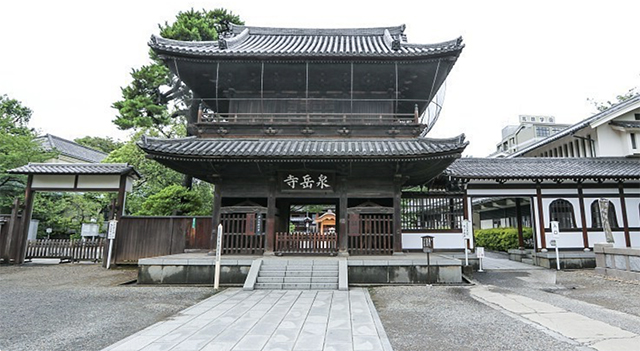
All this though hides the fact that nearby is a one of Tokyo’s famous samurai stories. It centres around Sengakuji Temple, which is the setting of the true story of the “47 Ronin”; 47 samurai who avenged their unjustly disgraced master (lord Asano Takuminokami of Ako (Hyogo)) in 1703 and then committed ritual seppuku (ritual suicide). The graves of all 47 samurai are in the temple grounds, and open to the public.
You can read more here: https://www.japan-guide.com/e/e3000.html
Other Lines: JR Keihin Tohoku Line (JK21) (Sengakuji: TOEI Asakusa Line; Keikyu Main Line (A07))
Shinagawa 品川 JY25
[Best Time to Visit: Day Time & Evening]
Shinagawa is another of those places that some will be wondering why we have included in this list.
Apart from the fact that Sengakuji Temple is near by, we know that most inbound visitors only see one side of Shinagawa, the Takanawa side where the hotels are situated, and because of that may think there is probably not much of interest there.
On the other side of Shinagawa Station, the shinkansen side, there is the Konan District. Although around the station there has been a lot of redevelopment which includes offices and residential, and quite a few restaurants, the traditional part of Konan is still very much alive with its many izakaya. It is another area to visit if you want to see the real Japan.
Shinagawa Station itself is undergoing a lot of redevelopment which will increase the number of shops in the station.
Within walking distance (or by bus) of Shinagawa Station are two spots worth visiting. One is Tennozu Isle, which is actually an isle, surrounded on four sides by canals. It is a good place for eating and drinking.
The other place is a section of the old Tokaido (road). The Tokaido 東海道(“do 道”means road) was in the old days the main road that linked, Tokyo, Nagoya and Kyoto, running through the Tokai region, hence its name. Much of the original road still exists, nowadays just as local roads. A section near Kita Shinagawa Station still has the feel of the old road, with many of the older buildings and shops still surviving and importantly still retaining a feel of the old times.
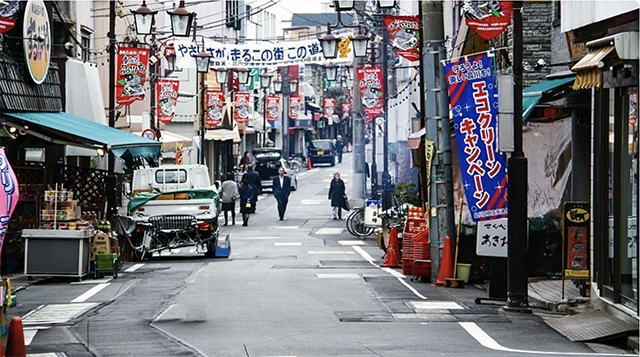
Shinagawa station is not actually in Shinagawa City, it is actually in Minato, so technically we should have written “Shinagawa Station” in the description above.
Something that most visitors will not necessarily realise is that when Shinagawa Station was first built, it was actually on the coast line. All of the land on the East side of Shinagawa Station has been reclaimed in the last 150 years.
Another interesting fact is that “Kita Shinagawa Station” Kita means North, is actually south of Shinagawa Station and is correctly named as it is at the northern part of Shinagawa City.
There are actually quite of few situations like this, including in Tokyo. Some are due boundary changes over time, others because of what locals have historically called an area which does not necessarily tie with official or administrative boundaries; other times because the place has been named because of a local landmark (e.g. a shrine or temple) which has subsequently moved.
Other examples include Meguro station which is actually in Shinagawa City and even Shinjuku Station, a large part of which is in Shibuya City.
It can quite interesting looking into the names of places you visit!
Tourist information: https://www.japan-guide.com/e/e3040.html
Other Lines: JR Keihin Tohoku Line (JK20); JR Tokaido Line (JT02); JR Joban Line (JT02)); JR Yokosuka Line (JO17) ; Tokaido Shinkansen; Keikyu Main Line (Kita Shinagawa: Keikyu Main Line (KK01)
Gotanda 五反田 JY23
[Best Time to Visit: Evening]
Gotanda is in Shinagawa City. Of all the places in this article, Gotanda is probably the least touristy and many people will be asking why is it mentioned!
The reason we have included it, is that it is quite a good place for eating and drinking in the evening, and even to some extent for lunch. It is a very local place with offices and residential and in fact little changed over the years.
The Meguro River runs through the town and it is a very pleasant walk between Gotanda and Osaki along the river, and you can also walk much of the way between Gotanda and Meguro along the river.
Although we say not much has changed, the new JP Tower (which replaced the old Yu-Port event venue), houses the OMO5 Tokyo Gotanda by Hoshino Resort (Hoshino is a famous hotel and resort operator in Japan) which has a sky-garden style public area, with cafés, bars & city views.
As mentioned, Gotanda is a good place for eating and drinking. Michelin starred chef Goji Kawarabata opened Hakata Ittaiichi ramen in Gotanda; Menya Sign is another Michelin level ramen restaurant, famous for its sake pairing. There are numerous izakaya and Yakiniku restaurants in Gotanda.
Information: https://hoshinoresorts.com/en/hotels/omo5tokyogotanda/
Gotanda Information: https://www.gotokyo.org/en/new-and-now/new-and-trending/231211/topics.html
Gotanda is for the more adventurous as there are less signs in English, but you will feel that you are in a more local area.
Other Lines: TOEI Asakusa Line (A05); Tokyu Ikegami Line (IK01)
Ebisu 恵比寿 JY21
[Best Time to Visit: Day time & evening]
The Ebisu area is named after the Yebisu Brewery which dominated the area. The famous Yebisu Brewery was founded in the Ebisu area in 1890 by the Nippon Beer Jozo Company. It was subsequently taken over by Sapporo Beer but the brewery was closed in 1988 and the sight was redeveloped for the Yebisu Garden Place. A new Yebisu Brewery was opened in 2024 at Yebisu Garden Place. [Ebisu and Yebisu in Japanese phonetics sound almost the same and there is no
Ebisu is also another Salary Man town with many izakaya, yakiniku and noodle restaurants and another great place to be in the evening if you want to get the local vibes spending time around the station in the Ebisu Yokocho area.
Yebisu Garden Place is worth visiting with its wide plaza, shops and restaurants. There is a a Michelin starred French restaurant (Joël Robuchon) and a Michelin recognised tempura restaurant (Tempura Azabu Yokota Ebisu Garden Place branch) as well as many other restaurant and cafe choices.
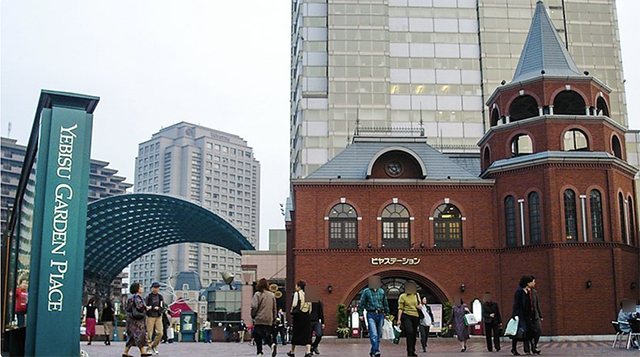
There is a Photographic Museum and the Yebisu Museum (with tours of the brewery) at Yebisu Brewery Place.
Ebisu is another non touristy location but whether you want to spend time in a traditional salary man area or a more modern complex then Ebisu is worth visiting: For information https://www.gotokyo.org/en/destinations/southern-tokyo/ebisu/index.html
Other lines: JR Saikyo Line (JA09); JR Shonan Shinjuku Line (JS18); Tokyo Metro Hibiya Line (H02)
Shin Okubo 新大久保 JY16
[Best Time to Visit: Day Time & Evening]
Okubo is sometimes lumped in with Shinjuku as it is very close (walkable distance), but it has a very different vibe being an area dominated by Asian restaurants (particularly Korean) and also Islamic food. In fact Okubo has the largest Korean town in Japan.
It is also a “young town” with a number of universities near by meaning there is always many young people around.
This is a good place to go if you want to see a different side of Japan and enjoy Asian or Islamic cuisine in a young persons atmosphere.
Information: https://www.gotokyo.org/en/destinations/western-tokyo/okubo/index.html
Other Lines: Okubo Station Chuo-Sobu Local Line (JB09)
Mejiro 目白 JY14
[Best Time to Visit: Day time (for Fire flies evening)]
The last place for this article offers a contrast to most of the places we have mentioned.
Mejiro is a quiet area with cafes and small shops. It also has a Mejiro Garden 目白庭園 with its large pond and a diverse array of plants. info https://www.tokyo-park.net/mejiro-garden/
The area also has a academic feel with the prestigious Gakushuin University in the area. There is also a Philatelic Museum, a must for stamp lovers info https://www.tokyo-park.net/philatelic-museum/
In the Mejiro area, about 20 minute walk (or taxi) from the station is the Hotel Chinzanso which also has a very famous historic Japanese garden that is also worth a visit (and taking tea or a meal at the hotel is also worthwhile).
Around May, the Hotel Chinzanso Gardens are famous for fireflies, and at the time that the fireflies are out, special firefly viewing parties are arranged.
The garden also has a pagoda. it is very serene and a good escape from the noise and busiest of much of the rest of Tokyo.
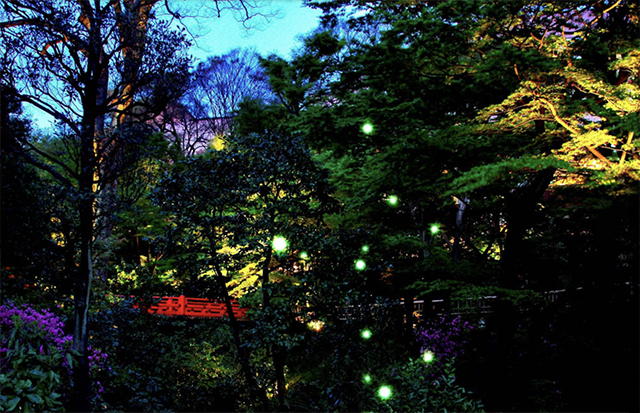
Hotel Chinzanso Garden information https://hotel-chinzanso-tokyo.com/garden/
Other Lines: none
Tokyo Yamathon
An annual event is the Tokyo Yamathon. This is an organised sponsored walk around the Yamanote Line. Participants of 2 to 4 people can either participate in “full marathon” calling at all 30 stations, time limit 12 hours, “half marathon” 14 stations (Tokyo~Mejiro), or Half of half Marathon 8 stations (Tokyo~Osaki).
Money raised goes to selected non profits.
The event is usually held on a Mid October Saturday. More information on the Yamathon website
Pictures in this article have been got from various tourist association sites except where copyright TS Japan Rail
Whether you want to See Japan by Rail or Explore Japan’s Railways, TS Japan Rail can help you plan your trip with ideas, designing travel itineraries, assisting with bookings and more.
We take the stress out of planning your trip and help ensure it is successful!
For more information on our services
see our homepage!


